Message


La version française de ces histoires se trouve sur En direct de l'intestin grêle

Wouldn't it be great if these stories were true? Unfortunately (or fortunately) they're not; they are just the product of my overworked mind. All characters and events are fictitious and if you think you recognize yourself or somebody you know in these stories, it was not my purpose and it is purely unintentional. In the meantime, I hope you will enjoy reading this blog. Feel free to link this blog wherever else you hang out on the Internet and to post comments below. I enjoy hearing from you.

Geoff

Showing posts with label religion. Show all posts

Monday, April 28, 2014

Hospital Diaries VI: The Overflow


This is part of a series. You can begin at Part I and follow the link at the end of each installment to read the next. 

I had been in the gurney hall for two days. Every move I made was painful and I still did not know what I was suffering from. It had all started with a gout attack but then I was told I had twisted my knee and had torn some ligaments. After being admitted to the hospital, doctors talked about arthrosis, spinal stenosis and a neurologist I nicknamed “the Seagull” insisted I needed back surgery.

Lying on my gurney I was pondering about how difficult it is to establish an accurate diagnosis. In all fairness I could not blame doctors for failing so far to identify the cause of my handicap. In a way, I felt it was like an evil genius, some kind of Keyzer Söze from the movie The Usual Suspects, was living inside my body, wreaking havoc at the expense of doctors/detectives who were completely baffled.


Only in literature and movies the issue is finding the “true” culprits. In real life, detectives and doctors are content to find a convenient suspect – all the best if it’s the real guilty party – to lay charges on, close the case and move on.

Those were my thoughts as I watched the hospital chaplain offer his sympathies to the family of a dying patient to whom he had just administered the last rites in one of the private rooms of the gurney hall.

At that moment an attendant showed up and began to place my personal belongings under my gurney. I was terrified she was going to take me against my will to the operating room for spinal surgery. I nervously asked her where we were going.

“I am taking you to your room sir.”

I could not believe my ears! Finally I was leaving the noisy gurney hall with its blaring bells and alarms! As I was profusely babbling my thanks to the attendant, she curtly said:

“I’m just doing my job sir.”

After I was wheeled into my new room, an orderly slid my body to a wider gurney with a thicker mattress. From the conversation the orderly and the gurney attendant were having, I understood that I was now in a place called the Emergency Overflow, a somewhat “underground” department set up for patients who had been residing in the emergency ward for at least 48 hours. This was the way the hospital had found to avoid the heavy fines that were imposed if the ministry of health’s performance goals were not met.

Mankind is obsessed with order, yet lusts for chaos. Maybe that’s why bureaucracy was invented. Bureaucracy is a form of labour organization purposedly designed to effectively achieve a cost-efficient use of resources in a rational way. However tremendous effort and considerable ingenuity are needed to get around bureaucracy’s cumbersome rules.

I owed my escape from the gurney hall to this paradox.

I was now in a no man’s land of a sort, some temporary quarters run by a minimal staff. From time to time a nurse would come by to take my vital signs and ask me to rate my pain on a scale from zero to ten and an orderly brought me my meals.

soup, salad, coffee, hamburger steak, gravy, squash, rice, pudding, health, nutrition, salad dressing
In Canada, hospital menus are designed by dieticians. Low-salt, low-fat and low-sugar meals usually taste like cardboard. If the food is not particularly tasty, it is however very healthy.
Everyday I had a visit from “the seagull,” the neurologist who was convinced I was faking my illness since I would not agree to have back surgery.

“Come on! Show me what you can do! Get up on your feet and walk!” the seagull would mock me.

I was nearing rock bottom. Having been confined to a stretcher for almost a week, I still did not know what I was sick from, my doctor was treating me as if I was imagining my ailment and I was taking painkillers that had no effect on my pain.

When my friend Lucide came to see me, she brought a bottle of Ibuprofen. I quickly took two tablets and hid the bottle in my bedside table hoping no overly conscious nurse would steal it away from me again.

While I was waiting for the medication to take effect, I told Lucide about my frustration and despair.

“Hmm… I saw three empty wheelchairs in the hall as I was coming to your room” said Lucide. “Maybe if we could borrow one and go to the cafeteria it would lift your spirits a bit.”

wheelchair, handicap, disability, hospital, health care
US president Franklin Delano Roosevelt (1882-1945) was confined to a wheelchair for the rest of his life after being struck with paralysis during a vacation at Campobello Island in New Brunswick. Still today doctors disagree about whether FDR suffered from poliomyelitis or Guillain–Barré syndrome.
My friend is a genius. I rang the nurse right away. After about 15 minutes of waiting, an orderly arrived and I asked her if I could have a wheelchair to go for a stroll with my friend.

“I’ll ask your nurse,” she replied.

Lucide and I continued our conversation for about 20 minutes and having no news from my nurse, I rang again. When the orderly returned, I asked her if the wheelchair I requested was coming.

“I’m sorry sir, your nurse is taking a break and I haven’t been authorized to give you a wheelchair yet.”

That was too much. The frustration that had been building up in me for the last week overflowed.

“Listen miss: are you telling me there is only one person in this ward who can allow me to go down to the cafeteria in a wheelchair to have coffee with my friend? This is a simple request! I’m not asking for a liver transplant! All I want is a wheelchair! This is not the third world, is it?”

My outburst took the orderly by surprise. She began to cry. Her sobs alerted her supervisor who rushed into my room.

“What have you done to my employee?” he enquired uneasily.

Ashamed, I told him what happened while a nurse was taking the orderly to the hallway to comfort her. Five minutes later, the supervisor came back with a wheelchair in which he helped me sit. Lucide wheeled me to the elevator to go to the cafeteria.

Still astounded by the drama that just happened I was nevertheless ecstatic to be sitting, moving away from the confines of my room.

Lucide and I got some coffee and I asked her to take me outside to smoke. It was a cold January night and at minus 20 degrees I was shivering. It was the first cigarette I had had in six days. It felt like I finally had found relief for my pain.

To be continued in Hospital Diaries VII: The Sweet-Smelling Ward


Wednesday, April 2, 2014

Hospital Diaries IV: The Gurney Hall


This is part of a series. You can begin at Part I and follow the link at the end of each installment to read the next.

A hospital is a strange world filled with machines and enigmatic people speaking unintelligible languages. For example, after only a few hours at the hospital, my vital signs had already been checked several times (I guess to make sure I was still alive), I had been incubated and rolled away on a stretcher through a maze of hallways to a “gurney hall.”

The gurney hall was actually a large square room of the emergency ward where patients waited either for a diagnosis or for a bed to become available. Along the outer walls, about 20 cubicles could accommodate two gurneys each, separated by a thin curtain. In addition, five glassed-in rooms were used to isolate contagious patients and the dying.

My cubicle neighbour was an unfortunate victim of a sporting accident, a 42 year-old woman who broke her back hitting a mogul while tobogganing with her children.

Natives, Indians, toboggan, winter sports, outdoors, transportation
A toboggan is a runnerless sled used to travel over snow in Canada. It was designed by Natives to haul supplies and young children. Nowadays tobogganing is popular among Canadian children and their parents who have forgotten they are not as flexible as in their youth. Illustration: Dog-sledges of the Mandans by Johann Carl Bodmer. Source: Beinecke Rare Book and Manuscript Library, Yale University, public domain
A nurse showed up at my bedside bringing with her the usual equipment for taking blood pressure and temperature as well as a clipboard to scribble notes.

“Good morning sir, my name is Florence and I will be your nurse today. Are you in pain? Can you give me an estimate of your pain?”

Maybe I was confused because of my sufferings but I didn’t understand the question: for a moment I thought I was supposed to estimate my pain in Canadian or US dollars.

“On a scale from 0 to 10 could you rate your pain?” explained the nurse.

“It hurts a lot,” I muttered.

“Very well. Let’s describe your pain as an 8 then. I will bring you some painkillers. If you need anything, just ring,” she said showing me an alarm button tied by its wire to my gurney’s railing. She then disappeared with her machines.

The pain was excruciating. With every move I made I moaned. Soon my cries were joined by my neighbour’s whimpers and the wailings of other patients in the gurney hall, cascading into a tormented concerto accentuated by the bells and alarms of monitoring machines.

After an hour of waiting for the painkillers that Florence promised me, I remembered I had some ibuprofen in my shoulder bag. I swallowed two capsules and drifted into a restless sleep.

“Wake up sir! I brought your medicine!”

It was Florence who was handing me two caplets of acetaminophen and a glass of water.

As I was about to take the pills from my nurse, she noticed the bottle of ibuprofen on my bed.

“What’s that? Who gave you this medication?” she enquired as she picked up the muscle relaxant.

“Nobody, I answered, it’s the medicine I was taking at home to ease the pain and the swelling.”

“Did your doctor prescribe this?”

“Not at all, it’s available over the counter in any drugstore and it provides me with some relief,” I replied.

“Sir, you are not to take medication that is not prescribed by a doctor. I must report this right away.”

And she left taking with her my valuable remedy and the painkillers she was supposed to give me.

Stunned to see my medication confiscated, I uneasily managed to doze off.

When I woke up, a smiling bearded little man who looked like a leprechaun was sitting at the foot of my stretcher, tapping on my leg.

“Good day, how are you today?” he said.

Still in a daze, I felt like I had magically awakened in Middle-earth and that anytime Gandalf the Grey and Frodo Baggins would come to take me on some outlandish journey.

“Not very well, but who are you?” I replied.

“My name is doctor Ogham and I am a neurologist. Please tell me how you ended up in my hospital.”

One more time I explained the unbelievable story of a gout attack that turned into a sprained knee degenerating into overall paralysis. While I was talking, the practitioner was feeling my knees, my wrists and my hands, taking notes in the process and asking me to flex my limbs.

“I see, I see,” said the doctor. “But I could see better with a CAT-scan, an MRI, an EMG, some X-Rays... I’ll make the necessary arrangements.”

He then left as I was struggling to make sense of what he had just said.

One hour later, an orderly came to wheel my gurney to the nuclear medicine department to be irradiated with a scanner.


CT-Scan, CAT-Scan, nuclear medicine, bagel, X-rays, hospital, health, diagnosis
CAT-scans are 3-D images of the inside of a human body produced with an X-ray machine that looks like a giant bagel. In the last 25 years, medical imagery has become so common that the number of people exposed to radiation has been on the rise. This could explain the colour of the skin of the patient in the above photograph.
Several times in the next few hours I was to be rolled in and out of the gurney hall for tests.

Finally, I was taken to a room where Doctor Ogham hooked me up to an electromyograph, or EMG, that sent electric shocks to my nerves to see if my muscles would react.

Laying down as the neurologist was poking me with needles, I felt like a voodoo doll being subjected to some arcane ritual.

Voodoo, New Orleans, witchcraft, spell, religion, folklore
Voodoo is a complex religion which origins can be traced to the African slave trade. The voodoo doll, an amulet used to cast spells, became well known following the release of the 1932 Hollywood movie White Zombie. Fortunately, modern neurologists have little in common with voodoo witch doctors.
“This is strange, very strange,” said the good doctor, “Your muscles are reacting perfectly well. This does not look like a neurological problem, everything is working normally.”

Back to the gurney hall, I became acquainted with my neighbour who told me she was waiting for a brace to be made in order to stabilize her spine so she could sit up and move without risking any further injuries.

“Anyway, she said, they can’t keep me more than 48 hours in the emergency ward.”

“Why is that?” I enquired.

“That’s the maximum time allowed by the Ministry of Health. The hospital will be heavily fined if it goes over it. They better find me a bed quickly.”

Night had come. Lying shivering on my stretcher, I could feel the pain creeping back to my joints. How I wished the nurse had not stolen my ibuprofen!

I achingly reached for the alarm tied to my gurney’s railing. Bells were ringing and patients were crying in the gurney hall. Exhausted, I fell into a restless sleep waiting for a nurse to bring me drugs to ease away my pain.

To be continued in Hospital Diaries V: The Seagull

Monday, March 4, 2013

Vision Quest


In my head there is an English garden in which wander all the people I loved in my past but who are no longer alive.

You see, I do not believe people ever die and neither will I. I will simply waste time and space in the head of somebody unfortunate enough to have loved me and will probably bring with me all the people who are currently walking around aimlessly in my brain.

This is how a robust collective unconscious is built.

I woke up in the middle of the night last Sunday, got up and saw the moon peeking through the window as my maternal grandfather was idly strolling between my brain cells.

My grandfather did everything according to the moon. By looking at the moon, he knew when it was time to get a haircut, to start haying the fields, to slaughter the pig. The moon also told him when the snow would fall, when the cow would calve, and when the maple tree sap would start to flow in the spring.

For my part, I notice that a full moon or a new moon bring with them colder or warmer temperatures.

moon, evergreen, spruce, hill, snow
The Moon is Earth’s only natural satellite. Anaxagoras (c. 500-428 BC) reasoned that the Moon was a gigantic rock that reflected the light from the sun. All who believed the Moon was made of green cheese were bitterly disappointed by this discovery.


Several years ago, I was attending a rave that the son of a friend organized in a secluded valley in the countryside. Hundreds of people came from all over North America to dance to the grooves of legendary DJs from Europe, Australia, the United States and Japan.

Sparks from a huge bonfire rose upward into the night sky while people walked around carrying torches. Gregorian chants that the DJ played on a background of “drum and bass” added a mystical feeling.

I started talking to an old Inuit from Nunavut. I told him that my grandfather lived according to what the Moon was telling him.

“The Moon has nothing to say,” the old man replied. “The stars hold all wisdom.”

Then, Natalie, the old man’s granddaughter – 30 years old and sweet as could be – offered me some of those dried mushrooms that take you to another level.

I do not approach psychedelic drugs casually. As a teenager I viewed drugs, rightly or wrongly, as the key that opened the door to the gods when one needed a special revelation. Since the gods are very powerful and very busy, I always thought they should not be disturbed unnecessarily.

magic mushroom, hallucinogenic, drugs, psilocybin, fungus, hallucination
Hallucinogenic mushrooms are found everywhere in the world in more than 200 species. The psychoactive element of this fungus is called psilocybin, an alkaloid with pharmacodynamic properties. As you can see from what I just wrote, to truly understand what they are doing, drug users should hold a degree in pharmacology or chemistry. Many thanks to WPClipart for making this public domain image available
.

That night, I felt the time was right for revelations. I accepted Natalie’s offer and she poured a few grams of dried mushrooms in the palm of my hand. It seemed to me like a lot but Natalie took my arm and said:

– It’s only residue. Nunavut mushrooms are very mild, don’t worry.

I chewed conscientiously and then swallowed the mushroom crumbs. Natalie and I sat on a downed tree trunk looking at the bonfire and people dancing, and waited for the mushrooms to work their magic.

We talked a little and I was feeling good. Natalie’s grandfather was standing nearby. He slowly raised his head and hands to the sky. He was different: he was now dressed in deerskins and was quietly singing in his language, shuffling his feet on the ground.

He was talking to the stars.

I watched him intently. I was no longer hearing the DJs’ music: only the soft song of the old Inuit was filling my ears.

My nose was itchy. Maybe it had been stung by a mosquito and now it was wet, probably because I scratched it until it bled. It was beginning to swell.

Actually, it was not swelling: it was GROWING.

I thought this was peculiar but interesting. I did not know where I was anymore. Everything started to waver rapidly and I fell on all fours. My face was turning into a snout and I was shivering as my skin was being covered with some kind of grey fur. I did not feel uncomfortable at all and strangely I was not afraid: this metamorphosis seemed to me absolutely in order. I began to howl gently.

The old Inuit was chanting and dancing by my side, beating on a drum as an accompaniment. For my part, I had turned completely into a coyote and my howling harmonized with the old man’s chanting.

coyote, canis latrans, snow, winter
Coyotes (canis latrans) can be found everywhere in North America. They are related more to the jackal than to the wolf. Coyotes are not an endangered species and sometimes mate with housedogs. In Germany, I’m told, coyotes have been crossbred with poodle dogs, probably to annoy the French. Many thanks to WPClipart for making this public domain image available.


I don’t know how long our performance lasted. All I know is that everything turned dark and when I gained consciousness, I was lying naked in a haystack in Natalie’s arms, still high from the magic mushrooms from Nunavut.

A few days later, back in town, I told my story to my friend Aaron who told me:

– Obviously you saw your totem...

– My totem? No, no, It was not a carved pole of scowling beasts with protruding eyes. I really turned into a coyote!

– A totem, you simpleton, is a protective spirit in North American Indian folklore. In your case, it seems your totem is the coyote. Unfortunate. You could have chosen better...

– I don’t understand...

– My poor friend, you never learned anything. The coyote is a deceiver, a trickster, a bit like Papa Legba in voodoo. The coyote stole fire from the Gods to give to mankind...

– Like Prometheus in Greek mythology, I wondered aloud to show that I had some cultural knowledge after all.

– If you say so, but the coyote keeps breaking rules, playing tricks even if his tricks have sometimes positive effects.

On my own after Aaron left, I thought about his last words and about the unorthodox path I had followed in life. To free myself from the constraint of rules, I often downgraded them to simple guidelines or mere suggestions, never hesitating to ignore them to achieve a goal I felt was more desirable.

“A wild dog as a protective spirit: I could have done worse,” I thought.

totem pole, Pacific Northwest, carving, cedar, winter, public park, Ottawa
Totem poles carved by Pacific Northwest American Indians are monuments sculpted from large cedar trees representing the protective spirit of their tribe but also to serve as witnesses to major historical events or even as tombs for their ancestors. Totem pole carved by Mr. Henry Hunt (1923-1985) of the Kwawkewith Indian Band, British Columbia, Canada.


Sunday, October 21, 2012

Geoff’s Beard


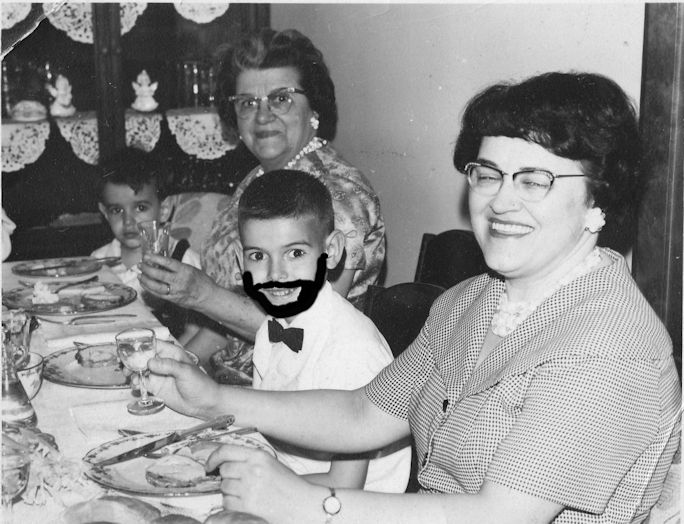
When people ask why I have a beard, I feel like they are asking why my eyes are brown. So I always give the same answer: I have worn a beard since I was a toddler and I even have a photograph to prove it.

children, beard, older ladies, dinner table,
The author at age 6. Despite being obviously talented, I never made it as a Photoshop artist...


Alas! This is far from the truth and Straight from the Bowels is the perfect platform to set the record straight. Let me tell you the story.

***
Years ago I lived in a small town in northern Canada; not the Great White North, but the Average Grey North nevertheless.

It was a miserable autumn night: cold, with relentless rain coming down furiously, trying to decide whether it should turn to snow or not.

I worked as a caretaker in a youth shelter, helping troubled teenagers cross over to adulthood. You know the story: kids having problems with drugs, alcohol, prostitution, petty crimes, and loneliness. Sometimes teenagers came to us on their own, sometimes it was their parents who would bring them saying: “Please take him/her, I don’t know what to do anymore!”

Often I felt like we should have been taking care of the parents.

That night I was alone. The five rooms of the old house were empty. I was reading in the kitchen by the woodstove which I was using before winter to save furnace oil.

Suddenly there was a knock on the door: it was two policemen with a young man, about thirty, dressed poorly, wet as a rag and holding a backpack in his hands.

– This “gentleman” came to the police station and asked us to keep him overnight. We’re not a hostel and he has no money. We could have left him in the streets but we would have had to arrest him later in the night for loitering so we brought him here since we know you sometimes accommodate people.

The logic used in the police force sometimes escapes me and I answered:

– This is not a hostel either but I will take this man as a guest since it is just wrong to leave anybody outside in such weather.

The two officers looked at each other, relieved they would not have to make an arrest, write a report and maybe stand as witnesses in front of a judge for an insignificant case.

When the two cops were gone, the young man humbly thanked me and told me his name was Roland.

“Welcome Roland. Take off your coat, put your bag in the corner and come and get warm near the stove. Are you hungry? Do you want to eat?” I added while giving him a towel so he could dry off.

I warmed up a big pot of stew I had on the electric range and served a generous helping to my guest who began wolfing it down as I made some tea.

While he was eating, Roland told me he had been hitchhiking to a small town 150 miles away to begin a new job that the halfway house had found him. He had just finished serving several years in jail for various offenses and wanted to start a new life, away from the city, hoping people would give him a second chance.

I have nothing against second chances nor third or fourth if necessary. Actually I would be at loss to know when a person should be considered beyond help.

Roland and I talked for some time, and then I took him to his room and wished him a good night.

When I got up in the morning, my guest had already gone, without a word, without a note. I put a log in the woodstove, made coffee and went to freshen up.

After my shower, I was getting ready to shave when I realized my electric razor was gone. In its place there was a shaving brush, a disposable razor and a can of shaving cream.

disposable razor, shaving brush, white mug, shaving cream, shaving kit, bathroom sink
The shaving brush can be traced to 18th century France where it is called a blaireau (badger) since the bristles are often made from the hair of that animal. Although at the time it was considered a status symbol to own such a brush, I find shaving using a straight or disposable razor and a shaving brush a tedious process.


Some people will say that the man I had kindly sheltered and fed ran away discreetly after committing his petty theft.

I would rather think that it was the Almighty or the Great Goddess who was sending me a sign. Or maybe it was the Great Vishnu himself – or one of his avatars – who came down from Heaven to take away my razor and make me understand it was time for me to rise above the ranks of the beardless.

That day I started to grow a beard. I have no regrets since wearing a beard is one of the few things I do well.

Vishnu, Indian god, baby, toddler, golden jars, white substance, shaving soap
The Indian god Vishnu as a child is sitting with two large jars of shaving soap he probably stole from people he wanted to grow a beard.


Saturday, January 21, 2012

Electronic Smoking


Back in 1980, a friend of mine went to France for three weeks to pick grapes. She returned a year and a half later after having travelled throughout Europe and the Mediterranean.

On Friday nights she would come over to visit me and we would play Scrabble and cribbage for hours on end while drinking wine and coffee.

Those are good memories.

One night as we were opening a third bottle of wine, my friend, whom I had never seen smoking, took out of her purse a pack of Egyptian cigarettes which she had brought back from her travels, and lit up a cigarette. I was not a smoker, however for fun I asked her to give me one. I was 25 years old and this was my first smoking experience. I enjoyed it so much that a month later I was smoking a pack a day.

I like the smell and the taste of tobacco. It reminds me of my grandfather who smoked Canadian tobacco that he purchased from farmers. It reminds me of my father, who before my parents’ divorce, when I was a child, would send me to the store to buy Sportsman cigarettes for him.

I like the gestures that come with smoking: opening a pack, taking a cigarette out, lighting it up while protecting the flame of the lighter or the match from the wind, holding a cigarette between my fingers, feeling the cigarette dangling from my lips, deeply breathing in the smoke and enjoying the taste of tobacco.

These feelings are irreplaceable.

At university, I had a non-smoking girlfriend who, when she woke up before me in the morning, would light one of my cigarettes and place it between my lips to awaken me. This is one of the most sensual memories of my youth.

Everybody smoked back then; it was the quintessential social activity. We shared cigarettes to get acquainted, to make a conversation last, to prolong an evening, to muster up courage at work. And drinking coffee or alcohol without smoking is just not the same thing.

In Jim Jarmusch’s excellent movie, Coffee and Cigarettes, Tom Waits manages to convince Iggy Pop that the beauty of quitting is that then you can have a cigarette, because you quit...


Everything is different now. First, governments implemented regulations to make cigarette packages less attractive. Then, they raised the price of tobacco products by applying whopping regressive taxes that sparked contraband and created a new underground cigarette manufacturing industry.

At work, employees were first relegated to smoking in badly ventilated rooms, then forced to smoke outside 30 feet away from the doors. The most basic principles of hospitality and health were ignored. Patrons of bars and restaurants would be subjected to the same predicament a few years later.

Which is the biggest threat? Catching cancer after decades of smoking or catching pneumonia after a few days or weeks of smoking outside in -30 temperatures?


To spare myself from having to smoke outside during the harsh Canadian winter, I decided to try switching to electronic cigarettes.

Electronic cigarettes, or e-cigs, were patented in the United States in the early 1960’s. At that time, the negative effects of smoking were not generally recognized so the product was a marketing failure.

An e-cig is about the same size and the same weight as a pen. Its components are an LED light to indicate when it is activated, a battery with the relevant electronic circuitry, a vaporizer and a cartridge containing a liquid that produces the taste and mist.

E-cigs are activated by inhaling from a hole at the end of the cartridge containing a liquid after it is screwed to the rest of the contraption.


This liquid contains propylene glycol or glycerin. These chemicals are often found in atomizers used to produce relief from asthma. It also contains food additives or nicotine although the importing of nicotine-based e-cigs is not authorized in Canada. Otherwise, it is fairly easy to find non-nicotine e-cigs.

I spent 10 dollars for a food additive-based e-cig that was supposed to provide me with the same enjoyment I would get from smoking two packs of regular cigarettes.

Unfortunately it was not to be.

While this e-cig gave me the impression that I was smoking “for real”, I was disappointed by the taste and smell of the cigarette. The device produces a sweet, herbal odour and taste that reminded me somewhat of the mixture hookah pipe smokers use: you know, the herbal stuff that tastes like apples or jasmine. I was never fond of flavoured tobacco; I prefer a strong bitter taste.

I also found the weight and size of the e-cig uncomfortable. It is impossible to let the cigarette hang from your lips because it is too heavy. Its length makes it awkward to handle.

Finally, the electronic cigarette produces a “smoke” that is really only a mist. It results from the evaporation of the liquid from the heated cartridge. In public, that mist is conspicuous and it might annoy oversensitive non-smokers or former smokers.

Since we are constantly bombarded with anti-smoking messages, it is hard not to be aware of the negative effects of this habit on the heart and the lungs. However, I am of those who believe that there are two sides to every coin. To every Romulus there is a Remus; to each Cain there is an Abel. If smoking is still popular despite the huge deployment of efforts to eradicate it, tobacco must have some benefits, benefits strong enough to resist advertising campaigns heavily subsidized by governments, the medical profession and the pharmaceutical industry.

Maybe we could learn some useful insight into the virtues of smoking from the Natives in America if we cared to listen...

In Canada, an often disgusting photo and a threatening warning about the danger of smoking must be displayed on half the surface of a pack of cigarettes. On the side of a package is a list of toxic products it contains. This kind of warning is likely to appear someday on restaurant menus, entrances to public buildings, cars, etc. Because, let’s face it, about everything we ingest, every location we visit, all consumer products we use and all of our activities constitute a health hazard of some kind.


Thursday, December 22, 2011

The Tax Collector


That morning when Matthew got up to go to work, there was a gutted pig on his porch.

Disgusted at the sight of the carcass, Matthew called his servant and asked him to remove it and to clean the porch. Then he went to the stable to get his donkey.

In the alley leading to the livery, someone on the upper floor of a neighbouring house threw the contents of a chamber pot out the window. Matthew stepped away just in time to avoid being covered with excrement. When he looked up to see who did that there was, of course, nobody there.

He could hear his donkey braying in its stall: somebody had painted the donkey green during the night.

Passersby laughed at him as he headed to work on his green donkey.

The donkey is known for his laziness and stubbornness. However, it is a more economical way to travel than by camel or by horse.


How he hated his job as a tax collector! Even though the pay was good, it was a permanent position and there were benefits, the contempt and disapproval from his fellow citizens were hard to take.

Since the beginning of time taxation has never been popular. Nobody enjoys paying taxes and everybody believes, whether it is true or not, that state finances are badly managed and that taxes profit the government and the rulers of the country.

The Taxation Office had assigned Matthew to Capernaum, on the shore of Lake Tiberias. The Jews kept calling the lake “Sea of Galillee” not wanting to recognize the authority of Tiberius, the Emperor of the Roman invaders. However Matthew did not work for the Romans: he was a public servant for the Governor, Herod Antipas, a Jew who was raised and educated in Rome.

Herod was praised by some for the great infrastructure works he oversaw and paid for with tax money. Others hated him because they saw him as the Romans’ puppet and as a man of loose morals.

Matthew arrived at work and tied up the donkey behind the building in the shade, and checked that there was enough water in the trough so the animal could drink when the sun was high.

He then entered his office, mentally preparing himself to meet merchants and traders who would shamelessly lie about their income and sales, and then, as soon as he threatened them with a tax audit, would end up begging without dignity.

At lunch time, Matthew left to get his donkey and have lunch under a palm tree before taking a nap.

The animal was lying on its side, still tied up, dead. Somebody had poisoned the water.

Appalled, Matthew stared at the animal’s corpse. He could not believe how cruel people were. He was not looking forward to walking, from now on, once a week, the six miles between Capernaum and Tiberias, the region’s capital, where he had to submit his report to the head office.

In Hebrew, Capernaum means “town of comfort”. However Matthew saw no comfort when he looked around at the customs office, the market with its tables crumbling under the weight of goods and produce, the warehouses bursting at the seams with merchandise waiting to be delivered by caravan or by boat to other towns, other countries.

He looked at the barracks where lodged the Roman soldiers responsible for keeping the peace in town. He knew that they would laugh at him if he reported the death of his donkey and that he would never be compensated.

He saw the inn and decided to have a pitcher of wine.

Smoke from hookah pipes filled the room. The patrons gave Matthew dirty looks as he came in. There was a free spot in a corner near a table where Simon, Andrew, James and John, local fishermen, were talking with a stranger.

The hookah pipe is a water pipe that was invented in India. It is very popular in the Middle East. It is mainly used to smoke flavoured tobacco but also other substances.


The innkeeper slammed the wine pitcher on the table where Matthew was sitting, his face in his hands, crying silently. Matthew poured a glass and, as he was about to drink, he noticed the stranger sitting with the fishermen looking kindly at him.

The way the man was looking at him troubled him and when the stranger asked “Tough day at work?” he could not hold back and started to cry again. The stranger rose and came and sat at Matthew’s table.

The stranger said his name was Yeshua. For whatever reason, Matthew felt safe and told him about the string of bad luck that had befallen him that day.

Yeshua quietly listened to him then said:

– We all have our cross to bear, myself maybe a little more than others. Follow me. Together we will wander on the dusty roads of Galillee. We will eat whatever food people give us and we will sleep in the fields to wake up in the morning drenched with dew. Some day after I am dead, you will write about all that you saw and heard. Then, you will go to Ethiopia where you will be stoned to death by the King’s soldiers for exposing his debauchery. I am sorry; there is nothing more I can do to help. Are you interested?

The Gospel of Saint Matthew recalls the years Matthew, patron saint of tax collectors, accountants and tax lawyers, spent with Jesus. However the account does not say much about how he became an apostle, that’s why Straight from the Bowels is gladly filling the blanks.


Was it the wine? Was it despair? Whatever it was, Matthew thought that the idea of becoming a vagrant and living a life of adventure was better than remaining a taxman.

In a second, his mind was made up.

When Matthew and Yeshua left the inn, Simon whispered to Andrew:

– I told you it would work! We still have some green paint left over. Let’s try again with someone else’s donkey tonight!

Andrew replied:

– All right! Let’s try with Judas, the moron working at the currency exchange who always complains that he is 30 silver coins short!